Showing posts with label tenor. Show all posts

Friday, September 23, 2011

Wednesday, May 18, 2011

Rockwell Blake - Pour mon âme

Rockwell Blake is, in my opinion, the best rossinian tenor of all time, at least from those I've heard live or in records.

In my other blog, Outras Escritas, I have several posts (in portuguese) dedicated to the tenor with my opinion about the characteristics of his voice and his performances in operas and recitals.

Today I found on YouTube a video with Blake's interpretation of the aria Pour mon âme from La Fille du Regiment by Donizetti (so, not Rossini). As you may know this famous aria for tenor includes 9 high C's, which make it very difficult to perform.

During his carrer, Blake always performed Pous mon âme not with 9 high C's but with 11, because in the end he sings the phrase "militaire et mari" instead of just the word "militaire".

In this video, Blake goes beyond himself and sings a high D flat on the phrase "militaire e mari".

Here is the vídeo (only audio is available).


Saturday, April 30, 2011

Di quella pira

Di quella pira is a show off aria for tenor in Il Trovatore and is one of my favorite Verdi's arias. In today's MET performance, that I'm listening on the radio, Alvarez did sung just half of the aria, in a lower key and avoiding singing many phrases at the end. This is usual today and I don't know why. Perhaps it was better to sing it right, avoiding the final high C (B in this case) that Verdi never wrote.

This is just my opinion. Alvarez got many applause in the MET.

Wednesday, April 27, 2011

Rolando Villazón

Rollando Villazón is not one of my favorite singers. I don't like is tone (timbre) and, im my opinion,  his approach to some roles is completely inadequate.

After surgery to his vocal cords, the tenor came back to performances but with some vocal problems. Many people, included myself, thought that his carrer as a singer was seriously compromised, but after saw the following video from a concert in Liceu (Barcelona), I think now he is definitely back. The voice is in good shape, although I still think that is voice is not suitable for Donizetti.


Tuesday, March 29, 2011

Por falar em Gregory Kunde


(Publicado no Outras Escritas)

Há dias falei aqui de Gregory Kunde aquando do comentário à ópera Anna Bolena do Liceu de Barcelona em que interpretou um excelente Riccardo Percy.

Aqui ficam dois vídeos com várias interpretações do tenor que considero-o um exímio interprete de Bellini, Donizetti e Rossini. Chamo a atenção para primeiro vídeo em que interpreta a ária A tanto duol/Ascolta, o padre da ópera Bianca e Fernando de Bellini. O compositor escreveu a partitura de tenor desta ópera para o famoso Tenor Rubini que interpretava notas agudíssimas. Kunde não só interpreta o Fá sobre-agudo constante da partitura (5:55) como ainda interpola im Mi bemol quase no final (6:12).


Sunday, March 13, 2011

Lawrence Brownlee

(Publicado no Outras Escritas)

No comentário que fiz à récita da ópera Armida de Rossini no MET de Nova Iorque, elogiei particularmente a voz do tenor ligeiro Lawrence Brownlee. O tenor, especialista em belcanto, tem um timbre belíssimo, uma boa técnica e uns agudos precisos e nada esforçados.

Aqui fica um vídeo do YouTube (coloraturafan) com uma selecção das suas melhores interpretações. Faço notar a inclusão do final do terceto da Armida, ponto alto da récita do MET.


Tuesday, July 08, 2008

La Favorita - G. Donizetti - Cossotto; Kraus, Bruscantini, Raimondi; NHK Italian Opera Chorus, NHK Symphony Orchestra, de Fabritiis

Na Opera News deste mês de Julho, é dado destaque a uma gravação histórica reeditada em vídeo pela VAI em Novembro de 2007 da Ópera de Donizetti - La Favorita.

A gravação ocorreu em Tóquio em 1971 e conta com a participação de Fiorenza Cossotto (Leonora) e e de Alfredo Kraus (Fernando) nos principais papeis.

Curiosa a critica de Robert Baxter (Opera News) que começa por dizer que em 1971 o mundo da ópera era dominado pelos cantores e não por encenadores.

Transcrevo de seguida o texto de Robert Baxter na Opera News.

This Tokyo Favorita suffers from some serious blemishes, but anyone who can look past the dim video image and the dated staging will find much to admire.

The year is 1971. Singers — not the stage director — are the driving force in this production. And what singers! Fiorenza Cossotto (Leonora) and Alfredo Kraus (Fernando) are in their vocal prime. Together, they justify the purchase of this historic performance, taped in the Tokyo Bunka Kaikan. Sesto Bruscantini (Alfonso) and Ruggero Raimondi (Baldassare) add to the star power, enhanced by Oliviero de Fabritiis's seasoned conducting.

Visually, we're back in the operatic Dark Age. Stage director Bruno Nofri does little more than line up the chorus and shove the principals to the front of the stage, where they express dismay with hand on forehead or convey deep emotion by clutching their breast. Salvatore Russo's gorgeous costumes, delicately colored pastel, look lovely but suggest no specific time or place. When they can be seen, Enzo Dehò's dimly lit sets look imposing in a vaguely Spanish style.

The singers dominate this Favorita. The prolonged ovation — almost ten minutes of cheers and lusty applause — reflects the heat generated by these artists. Cossotto's brass-toned singing has scale and impact even when she lunges for high notes or plunges into chest voice. She offers a master class in the art of sustaining applause: after winning an ovation by banging out Leonora's "O mio Fernando" in brazen tones, she lowers her head and bats her eyes before placing hand on heart. Then, clasping her hands and smiling, she advances toward the audience.

Kraus, like the diva, provides a textbook performance — in vocal technique, not in milking applause. His tautly strung voice rises without effort to top C-sharp and flows with keen control through Donizetti's cantilena. He manages to suggest Fernando's transition from ardent lover to shamed hero and, joined by Cossotto in torrential voice, he rises to the testing demands of the long duet that crowns the opera. Urged on by de Fabritiis's incisive baton, the tenor and mezzo-soprano attack the music with fierce resolve and fill out the vocal lines with vibrant tone.

Bruscantini and Raimondi provide strong support but fail to reach this exalted level. Bruscantini almost compensates for his throaty tone with his solid musicianship and acting skills. Seizing center stage with his commanding presence, Raimondi sustains the music admirably even when his lightweight bass-baritone thins out in the lower reaches.

Thursday, September 06, 2007

Morreu o nosso Pavarotti

Soube há pouco que morreu o Pavarotti.
Outra grande voz que se cala para sempre.
A minha homenagem....

Viva o Pavarotti....

Tuesday, October 17, 2006

Lawrence Brownlee

Vi este nome num comentário a um vídeo com o Juan Diego Floréz em www.youtube.com.
Por curiosidade consultei um site na Internet sobre este intérprete.
Não vejo a hora de o ouvir.
Já agora quem estiver interessado pode consultar a página ofícial do tenor em http://www.lawrencebrownlee.com/.

Wednesday, August 09, 2006

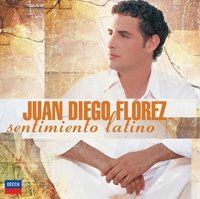
Juan Diego Flórez volta a brilhar

O Tenor Juan Diego Flórez famosissímo nas suas interpretações em óperas de Rossini, Bellini e Donizetti, faz agora o um "semi-crossover" com o seu novo trabalho de nome "Sentimiento Latino".
Estou curioso com esta nova abordagem se bem que deteste "crossovers".
Trancrevo a critica de IRA SIFF, publicada na Opera News em Maio passado.

Tenor Juan Diego Flórez, known primarily for his prodigious gift with florid music, takes a semi-crossover turn here, singing early- to mid-twentieth-century songs by Latin American and Spanish composers. The material lends itself perfectly to the operatic voice, and Flórez, with his sunny tone and bravado high notes, clearly has a great time putting it across.

The disc opens with an exciting arrangement of Pedro Elías Gutiérrez’s “Alma llanera” from a 1914 zarzuela. Flórez, very much a tenor, crowns it with a terrific high C. A contrast in mood follows immediately, with a wonderful melancholy waltz, “Ella,” by Mexican composer José Alfredo Jiménez. María Isabel Granda Larco, a prominent Peruvian singer/songwriter who was known as “Chabuca Granda,” is represented with three songs, all arranged by Flórez, who grew up admiring her work. The evocative “La flor de la canela” and “Bello durmiente” are both lovely. “Fina estampa” is accompanied only by guitar (David Gálvez) and bongos (Flórez) and offers a pleasant contrast to the arrangements and orchestrations (mostly by Ángel “Cucco” Peña) on the rest of the disc, which are marvelous — rhythmically contagious, with wonderful trumpet and string licks.

One can never have too many recordings of Agustín Lara’s “Granada,” committed to disc by everyone from Mario Lanza to Fritz Wunderlich (in one of his most thrilling recordings), and Flórez’s spirited rendition is most welcome. José Sancho Padilla’s tender “Princesita” was a favorite of Tito Schipa, and here Flórez offers a dynamic modulation and sweetness one expects from his voice type but doesn’t always find in his onstage work.

Flórez also wisely opts to include little-known chestnuts like María Grever's "Júrame," a gorgeously sweeping, dramatic, operetta-style melody. Also operatic in scope is “Siboney,” by the beloved Cuban pianist/composer, Ernesto Lecuona. Closing the disc is “México lindo,” a thrilling, driving ode to the homeland of its composer, Chucho Monge, crowned here by another of the tenor’s sensational high Cs. Led by Miguel Harth-Bedoya, the Fort Worth Symphony Orchestra, the Mariachi de Oro and numerous instrumental soloists all lend excellent support and splendid playing.

IRA SIFF

Alberto Grilo